What Happens If You Run a Red Light? A Simple Guide explaining real risks, fines, safety, and driving consequences clearly.
I still remember. A moment It made me rethink something I used to treat. “ normal driving behavior.” It was evening time, traffic There was light, and I got closer. An intersection I knew that very well. The signal became pale, and for a split second, My brain did familiar calculation most drivers They don’t even realize they’re doing it: speed vs. Discontinue, time vs. Distance, risk vs. Convenience. And so the thought Appears almost automatically: ” I can handle it.”
I didn’t run. The red light But that period that moment Sat with me because I understood something important, Most people don’t really understand what happens if you run a red light under Criminal Law Unless they have already done so, or avoid doing so. So let’s violate it down properly. Not just legal. Not just technical. But in reality, the way It actually plays outside the real world.
What Happens If You Run a Red Light? The Simple Answer First
If you run a red light, Immediate results usually include:
- A traffic violation fine
- Driving license penalty points( Depends on the country)
- Possible court I summon serious cases
- Insurance premium increase
- I extreme cases, Suspension of license
So on a basic level, what happens if you run a red light is Straight: You will be punished. But only this the surface layer. The real story is much deeper, and much more important.
The Real Meaning Behind A red light( most people never think about it)
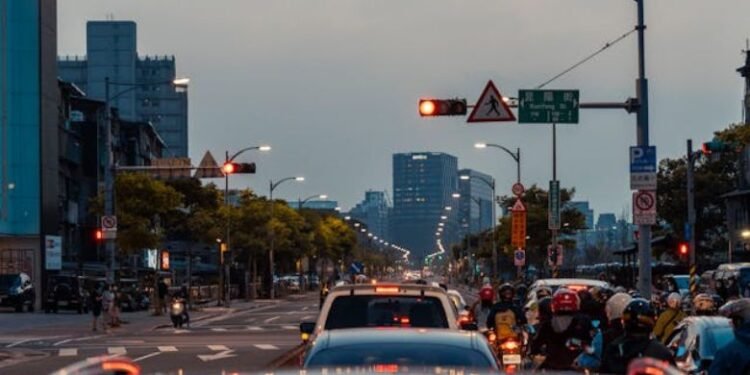
Traffic Light is not the only principle. They are coordination systems to prevent conflicts. Every intersection Basically it is a controlled collision zone where multiple traffic streams Without coordination to cut each other, there will be chaos.
So the engineers designed. Traffic Light to do something distinctive: Transform unpredictable human movement In an expected time- based flow.
Ie:
- Green = Your move is allowed.
- Red = Your move has been temporarily removed.
The system Now it is here the key insight most drivers miss: When you run a red light, You just don’t make it through a rule, You fracture the synchronization. Timing system which prevents collision. That is why what happens if you run a red light It is treated very seriously the world.
Why Running It’s a red light Dangerous( Even But Low Speeds)
Most people Assume that risk only comes from speed. But at intersections there is no speed the main issue, is the angle of attack.
Most of all common crash Because of running It’s a red light a T- bone collision, where one vehicle kills the other. The side.
And here’s why that matters:
- Side structures of vehicles is weaker than front structures
- Occupants is complete the impact point
- Airbags is less effective I side collisions
- Even 30– 50 Impacts of km/ h can be serious or fatal
So when we query what happens if you run a red light, one Most of all important answers is: You increase dramatically. The risk Of a high- severity crash, Even low speed.
The Hidden Beginning: The yellow light problem
For the most section red light violations Don’t really initiate the red light. They Begin with yellow. This is where things procure psychologically interesting. A yellow light is designed as a decision buffer, Not the speed increase signal. Engineers calculate it based on:
- Average human reaction time(~ 1– 1.5 seconds)
- Vehicle speed
- Brake length
- Road conditions
But the drivers don’t think in formulas. They Think instinctively.
So instead of evaluating the stopping distance, the brain Often said:
- “ I’ m close enough”
- ” I can make”
- ” I don’t desire to deliberate down suddenly.”
What does it produce? traffic Engineers call. The dilemma zone, The exact situation where most violations be And that’s the place what happens if you run a red light Often starts much earlier the actual red signal.
What Happens After you run a Red Light( Modern Enforcement Systems)
Today, For the most part traffic systems Don’t just trust human observation.
They utilize automated detection systems which usually records:
- Vehicle Position before crossing the stop line
- Exact time signal turned red
- Vehicle movement inside the intersection
So what happens if you run a red light Not based on opinion, it’s based on time- stamped data.
These systems Designed for the purpose of:
- No emotions
- No prerequisites
- Only measurable violation evidence
This is why enforcement is becoming more consistent globally.
Financial Consequences( Beyond Just a fine)
When people request what happens if you run a red light, they Often think about just the ticket.
But the financial impact Going in depth:
1. Immediate punishment
It varies. Country and severity of violation.
2. Effect of insurance
Insurance companies Can be classified red light violations such as: “ High- risk driving behavior”
Which can cause:
- Higher premiums
- Reduced discounts
- Stricter policy conditions
3. Long- term driving record effects
In structural systems:
- Penalty points Collector
- Repeated violations Increase in penalties
- License suspension becomes possible
So the cost Just not instantly, these connections over time.
Different Countries, Different systems( but Same Principle)
Although the rules are different, the underlying logic Of what happens if you run a red light is the same worldwide:
🇩🇪 Germany- style systems
- Strict classification( simple vs serious violation)
- Points- based driving record
- Strong enforcement consistency
🇺🇸 US- style systems
- Emphasis on liability and insurance responsibility
- Variation from condition to state
- Strong role Of private insurance system
🇵🇰 Developing traffic systems
- Enforcement inconsistency
- Human policing plays larger role
- Variable compliance behavior
But despite the differences, the core principle Everywhere is the same: Red light violations to disturb controlled traffic flow And increase systemic risk.
The Future: Be careful Traffic Systems And AI Control
The future to resolution what happens if you run a red light changing rapidly.
Modern cities Moving towards:
- Adaptive traffic signals
- Real- time traffic flow monitoring
- Based on AI prediction systems
- Communication from vehicle to infrastructure
Instead of reacting after breach, future systems Should try faster: Predict and prevent primary fractures they are found That is changing. Traffic enforcement From punishment to prevention.
Psychological Reality: why People Still Run Red Light
Even the rules, with cameras, and penalties, People still do.
Why?
Because human decision- making Not purely logical.
Common psychological factors Includes:
- ” I can handle it” bias
- Time pressure illusion
- Greater confidence in driving characteristics
- Discomfort with sudden braking
- Underestimation of risk
Most violations is not intentional aggression, They are split- second misjudgments. And he is. An important part of understanding What happens if you run away? a red light.
The Deeper Truth( most people miss it)
If we acquire everything away, traffic systems is made on one core assumption: Humans will behave as expected within defined time windows. A red light violation breaks down that assumption.
It introduces unpredictability. A system Designed to eliminate the unexpected. That is why consequences exist, not just to punish behavior, but to perpetuate it system stability.
Key Takings
- Running a red light It just isn’t a rule violation; It breaks a traffic system Designed for controlled movement.
- It increases significantly. The risk Of severe accidents, Specifically dangerous side- impact( T- bone) collisions.
- Even low- speed violations can lead life- threatening outcomes due To weak side vehicle protection.
- Most violations Commence with a misunderstanding. The yellow light And go inside the “ dilemma zone.”
- Modern systems Record breaches with accurate automatic timing. Camera data.
- Consequences The penalty includes, penalty points, Increase in insurance, and possible license suspension.
- The impact Varies from country to country, however all systems Treat it as such a high- risk behavior.
- Ultimately, it interferes. Traffic synchronization, That is why it is taken seriously all over the world.
Additional Resources
- Insurance Institute for Highway Safety: A leading crash research organization providing data-driven insights into intersection accidents, fatalities, and the real risks of running red lights.
- AAA Foundation for Traffic Safety: Research-based organization studying driver behavior, risk perception, and traffic safety issues including intersection violations and crash prevention.