
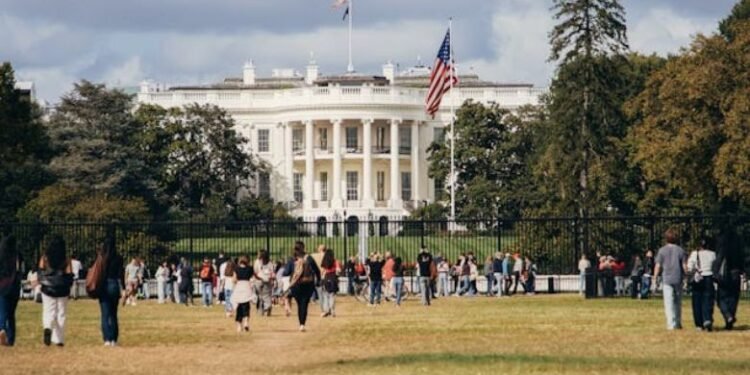
White House Flag Pole Law Regulations: A Complete Guide to laws, authority, Flag Code, and White House flag rules explained clearly.
I still remember the exact moment this topic first caught my attention. I scrolled. News images, even search anything serious, when I saw the flag over the White House was down. Not dramatic, not dramatic enough to scream at you, but enough to make you encounter “different”.
And for most people, my brain jumps to a simple assumption: “There must be a strict law controlling it.” That curiosity raises questions. Millions of people try to understand white house flag pole law regulations, because it feels like something that should be highly regulated, precise, and locked down under Civil Law principles. Legal code.
But the deeper truth is much more interesting than a simple law. It’s recipe mix presidential authority, tradition, and symbolic communication. Everyone works together, a system most people never think about.
Let’s Damage It Down Properly Without confusion, and with this real clarity.
Why People Ascertain Out “White House Flag Pole Law Regulations”
When applying white house flag pole law regulations, they usually pursue answers to questions like:
- Is there a specific law to control the White House flag?
- Who decides when it should be reduced?
- If there are laws, what are the penalties if not followed?
- Is Congress involved in flag decisions?
But surface level, it seems so a legal issue. But in reality, it’s a hybrid system of law + tradition + executive power. And there it is, most explanations get it inappropriate. They’re trying to deal with it as a normal legal rulebook, when in fact it isn’t one.
The First Truth: Is Not Specific Flag Pole Law
Let’s launch with the most important fact: There is not a single law called white house flag pole law regulations. Instead, the system is loosely based on the United States Flag Code.
But here is the key detail most people miss: The Flag Code is NOT enforceable law.
It does not:
- Produce sentences
- Assign penalties
- Allow fines or legal action
It is written using soft language such as: “should”, “custom”, “recommended” So while it sounds official, it is more national etiquette to the flag, not a strict legal enforcement system.
How It Actually Works in Practice
So who actually controls the flag? If not strict enforcement law, then who decides what happens? The answer lies with the President of the United States.
Through the Executive Branch of the United States, the President has the power to:
- Order the flags at half mast
- Determine the period of mourning
- Issue national proclamations
This is not an automatic legal formula:
- No fixed timeline
- No rigid rulebook
Instead, decisions are made based on:
- National events
- Public sentiment
- Historical precedent
- Presidential discretion
So actually, white house flag pole law regulations is not controlled by law alone, they are controlled by leadership judgment and tradition.
The Hidden Operational System Behind the Flag
Now here is something most people never contemplate.While decisions are symbolic, the execution is very accurate. The physical handling of the flag is administered by the White House Military Office.
It includes trained personnel responsible to:
- Pick up the flag completely before reducing it
- Be sure correct ceremonial positioning
- Follow exact timing protocols
- Maintain flag condition and replacement
This is where things go from symbolic to operational. Even though white house flag pole law regulations is not strict law, the execution behind them is very disciplined, almost military in precision.
The Half-Staff Misconception
One of the most common misunderstandings is what “half-staff” actually means.
Most people imagine:
The flag sits right inside the middle of the pole.
But this is wrong. The flag is reduced to a specific ceremonial position below the top. There is no visual center point.
And the reasoning is important:
- It is symbolic, not geometry
- It follows tradition, not goal
This is why people get confused while learning about white house flag pole law regulations, because they expect mathematical precision, when the system is symbolic accuracy.
Why the White House Flag Matters Globally
The flag at the White House is not only a national symbol. It is a global signal.
When it changes position, it is immediately interpreted worldwide:
- Governments
- Media outlets
- International observers
- Social media networks
Because it speaks in silence as:
- National mourning
- Political tone
- Major historical events
No announcement required. The visual itself has meaning. And that’s why white house flag pole law regulations extends beyond legal curiosity, it is how the United States communicates symbolically to the world.
Why This Topic Confuses Many People
The confusion comes from a simple assumption: “If anything at the White House, it should be strictly controlled by law.” But this assumption does not fully apply here.
Instead, white house flag pole law regulations works through a tiered system:
- Guiding Principles
The United States Flag Code gives structure and etiquette
- Executive Authority
The President of the United States makes official decisions
- Operational Execution
The White House Military Office performs the procedure
- Tradition
Historical precedent shapes expectations and consistency
It isn’t a single legal system. It is a multi-layered symbolic framework.
A Personal Shift in Understanding
When I first started researching it, I expected:
- A simple answer
- A law number
- A regulation section
- A strict rule
But what I found instead was something more interesting. The system behind white house flag pole law regulations is not designed to be rigid. It is designed to be meaningful.
It illustrates how a nation:
- Responds to events
- Signals respect
- Communicates sorrow
- Keeps tradition
The flag above the White House is not just controlled. It is interpreted. And that interpretation carries national weight.
Common Myths (Explicitly Rejected)
Myth 1: There are tough legal penalties
No , The Flag Code is not enforceable law
Myth 2: Congress administers flag positions directly
No , Decisions are made by the executive branch
Myth 3: The flagpole itself is heavily regulated
No , Rules focus on flag display, not the structure
These misunderstandings explain why white house flag pole law regulations is a frequently searched topic.
Final Explanation (Plain and Simple)
So what is white house flag pole law regulations really?
It is a combination of:
- The United States Flag Code (guidelines, no enforceable law)
- Decisions of the President of the United States
- Execution by the White House Military Office
- Long-standing national tradition
It is not a single strict law, it is not a punishment system, it is a blended structure of authority, symbolism, and protocol.
Key Takings
- There is no specific law called White House flag pole law regulations
- The flag follows the United States Flag Code, which is guideline-based, not enforceable law
- Final authority lies with the President of the United States
- Day-to-day execution is handled by the White House Military Office
- The Flag Code gives recommendations, not punishments
- “Half-staff” is a ceremonial position, not a mathematical midpoint
- The flag serves as a symbol of national mourning, respect, and global communication
- Overall, the system is a mix of tradition, executive authority, and symbolic protocol, no strict law.
Additional Resources
- U.S. Flag Code: Primary legal text of the United States Flag Code. Explains flag display rules, including half-staff protocol and ceremonial guidelines.
- U.S. Department of Veterans Affairs, Flag Etiquette Guide: Government-issued guide explaining proper flag display rules, half-staff meaning, and ceremonial procedures.