
Official Laws
  • Public Law
    • International Law
    • Criminal Law
  • Private Law
    • Employment Law
    • Family Law
    • Civil Law
  • Business & Intellectual Property Law
    • Intellectual Property
    • Business Law
  • Legal News
No Result
View All Result
Official Laws
  • Public Law
    • International Law
    • Criminal Law
  • Private Law
    • Employment Law
    • Family Law
    • Civil Law
  • Business & Intellectual Property Law
    • Intellectual Property
    • Business Law
  • Legal News
No Result
View All Result
Official Laws
No Result
View All Result
Home Legal News

Brief Voy: A Smarter Way to Plan Your Next Trip

by Official Laws
May 28, 2026
in Legal News
0
Brief Voy: A Smarter Way to Plan Your Next Trip
Share on FacebookShare on Twitter

Texas Built Construction lawsuit guide: learn homeowner rights, construction defects, claims, and legal options for Texans today.

I’ve lost count of how many trips I started with twenty browser tabs open, a half-empty coffee mug, and a total sense of panic. We have all been there, toggling between flight confirmation emails, hotel websites, and a dozen “top ten” lists, trying to figure out where we are supposed to be. The excitement of a new destination usually gets buried under a pile of logistical stress. But what if the planning phase was actually… easy? I built Brief Voy because I got tired of the chaos. I think you deserve to be reclaimed. The time And mental energy You usually waste on stress. Coping a few simple travel planning habits is the real secret Going from a tense, stressed traveler to a confident, relaxed explorer.

What is Brief Voy?

Simply put, Brief Voy is the travel companion I always wished I had. I got fed up watching friends lose their minds to “analysis paralysis” because the internet is flooded with too much messy, conflicting information. Brief Voy acts as your personal digital assistant. We take the overwhelming details of your trip and turn them into a clear, simple path. My goal is to help you spend way less time staring at a screen managing tabs and more time soaking in the atmosphere of your destination. By combining my own experience with tools that actually make sense, Brief Voy gives you the framework you need to move from that first “I want to go there” idea to a finished, seamless journey. We’re here to make pro-level planning feel easy for everyone.

Think About Your Goals First

A great trip It starts long before you depart. The airport. Begins with a reality Check in your own head. I’ve learned the rigorous way that if you treat it with a plan. A” chore” To cope with this, you will feel like you are working. A second job. Rather, endeavor to witness it as the first step of the adventure. Before you order. A single flight, Cease and petition yourself the ugly, honest question: what is this trip Actual?

Trying to identify out about yourself? a new culture, Or do you just need to rot? a beach to five days? When you understand” why”, it’s easier to articulate” no”. The activities It doesn’t serve you. That clarity Helps you avoid the common trap Trying to do too much, that is the fastest way to bend a dream vacation in tiring, race- against- the- clock nightmare.

Create a Single “Home” for Your Plans

Stop letting your plans live in a dozen different places. Don’t rely on random emails, screenshots, or loose paper notes that always vanish the moment you need them. Whether you prefer a digital document, a notes app, or a system like the one we offer at Brief Voy, you need a single “home” for your trip details. When your tickets, hotel address, and tour confirmations Everyone is involved one spot, You conclude feeling it. Nervous itch” Did I forget something?” But the security checkpoint. Keeps everything inside one place holder your mind Calm so you can actually focus on the beauty of the trip Instead of the logistics.

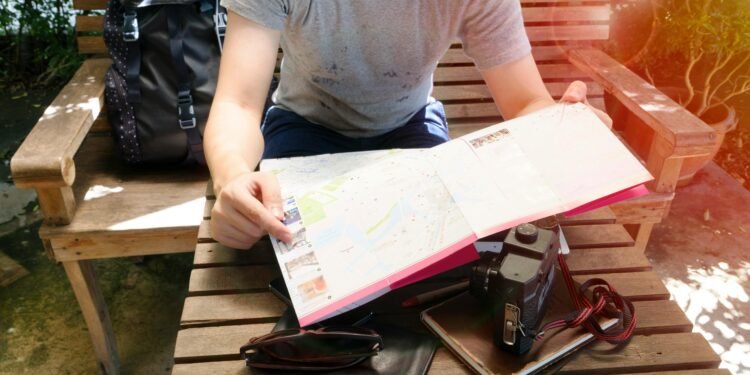
Map Out Your Trip Before You Book

Here is a pro tip I swear by: look at a map of your destination before you put your credit card down for a hotel. I’ve seen so many people pick a hotel just because it was cheap, only to realize later that they are an hour away from every landmark they actually wanted to see. Use free mapping tools to drop pins on the places you absolutely have to see. Suddenly, you’ll see a cluster of stars on the map, and that is exactly where you should base yourself. Staying close to the action saves you hours of frustrating commuting time and keeps more money in your pocket that would have otherwise been spent on taxis or trains.

Why Planning Actually Creates Freedom

Some travelers act like an itinerary is a prison sentence, like planning your day kills your “spontaneous soul.” Honestly? This is nonsense. I my experience, It is a difficult project the secret To true spontaneity. If you are nervous because you recognize about your hotel Confirmed or how catch? your next train, You’re not” adventurous”- you’re just stressed. But when the boring logistics are settled, you suddenly have massive breathing room. You can take a wrong turn, wander down a side street because it looks cool, or hide in a hole-in-the-wall cafe for three hours without checking your watch or feeling guilty. Planning isn’t about being stiff; it’s about building a safety net so you can actually afford to get lost.

Don’t Fall into the “Do It All” Trap

It’ s Seeing is natural. Every single landmark I a new city. But if you fill every hour of With your day trip, you are about to arrive. Home feeling More tired than when you left I’ ve started a rule For me: Choose three major things Because it is not negotiable. Every five days of travel. Everything else is fair. A bonus.

This strategy, often highlighted in Legal News travel and lifestyle discussions, ensures that when you visit a museum, a park, or a monument, you are fully present and active instead of rushing to the next stop on your list. Remember, a trip is meant to be enjoyed, not perfected. 

Use Technology Without the Overload

We live in an age where there is simply too much information. It’s incredibly easy to get overwhelmed by thousands of blog posts and review sites. Try to pick two or three trusted sources and stick to them rather than trying to read every single thing on the internet. When you use tools that help you track your budget and travel routes, you stop guessing and start knowing. At Brief Voy, we focus on giving you clear, helpful data because I know that when you are confident in your information, you make better decisions. Digital tools should be there to make your life easier, not to add to the noise.

Pack Smarter for Your Next Trip

Organization your trip It also means better packaging. I used to be. The guy as packaged the person I wish I was a hiker, the fancy diner, And the training guest, all in one trip. Now I’m packing. The person Actually I am that trip. If you have your itinerary Planned, you will understand exactly what you need. I am a huge fan of packing cubes; They hold my clothes Grouped by category and stop. My suitcase From becoming a disaster zone.

When you can see everything. Your bag Absolutely a glance, Preserve yourself this disappointment, middle- of- the- night panic Dig through a mountain of clothes to determine your charger or your passport.

Pre-Trip Prep: The Secret to a Relaxed Arrival

Most travel “disasters” are really just us being lazy at home. I’ve been that person, the one standing at a hotel counter in another country with a frozen credit card, sweating while the teller stares at me like I’m a criminal. Don’t be that guy. Take an hour before you leave to actually do the boring stuff. Call your bank so they know you aren’t being robbed in another country. Download your offline maps so you aren’t stuck in a city square like a lost tourist with a dead data plan. Get the annoying prep work done at home so you can actually enjoy the airport instead of panicking in the security line.

Staying Flexible When Plans Change

Let’s get real. Your spreadsheet Can be a work of art, But the journey is still to find out a way to destroy it. Flights Collisions, no trains in sight, and inevitable rain. The minute you acquire out the door. If you’ re Flying blind without a plan, this is when you have a complete meltdown. But if you have taken over. The boring stuff beforehand, It’s just a disaster an annoying detour,  not a trip- ending catastrophe. To be your ducks I a row gives you the mental energy To actually handle the mess.

You’ re Not burning brain cells Trying to figure out where? you’ re to sleep you’ re costs that energy finding A new way or catch a beer while you wait the chaos pass through

Keep Learning from Every Trip

Look, nobody nails their first trip. My first few were absolute wrecks. I’m talking about hauling around a suitcase of clothes I never touched and a schedule so packed I basically lived out of the back of a taxi. But you live, you learn. When things blow up, and they will, actually pay attention to why. Did you pack three pairs of boots you didn’t touch? Was your itinerary so frantic you forgot to eat? Seriously, write it down. If you don’t, you’re just going to do it again next time. Stop reading what the “travel experts” tell you and start building a system that actually makes sense for your life. You don’t need a pro; you just need to stop making the same mistakes twice.

Conclusion: Just Get Out There

Investigate, you have to be. A pro Planning a trip which is not broken. You don’t have to remove a employment. An agent, And you don’t have to a travel degree. You just have to discontinue creating. The process harder There must be more. Centralize your info. Check. A map. When you’re turned on, allow yourself to actually gradual down. The ground. It really is. It’s not magic, it’s just getting organized so you can actually show up to your own vacation. With Brief Voy, we’ve tried to make that part easier so you can stop staring at spreadsheets and start actually going places. The world is out there, and it’s way too big to spend your time worrying about confirmation codes. Stop overthinking it, get it handled, and just go.


Related Posts

Optimum Energy Partners Lawsuit Allegations Timeline &Impact

Optimum Energy Partners Lawsuit: Allegations Timeline &Impact 

by Lucus Ah
May 21, 2026
0

Optimum Energy Partners lawsuit explained: allegations, timeline, investor concerns, and Legal News updates in one clear guide.  If you are...

Root to End Shampoo Lawsuit Facts, Rumors & What's Going On

Root to End Shampoo Lawsuit: Facts, Rumors & What’s Going On 

by Lucus Ah
May 20, 2026
0

Root to End Shampoo Lawsuit: Facts, Rumors & What's Going On explained clearly with facts vs rumors and no confusion...

Starry Sierra Mist Lawsuit Facts, Rumors & What’s Going On

Starry Sierra Mist Lawsuit: Facts, Rumors & What’s Going On

by Lucus Ah
May 20, 2026
0

Starry Sierra Mist Lawsuit: Facts, Rumors & What’s Going On explaining rumors around PepsiCo soda claims and real facts clearly...

Next Post
Legal Rights After a Workplace Accident A workplace accident can affect health, income, confidence, and long-term earning ability. Injured workers often focus first on treatment and recovery, but it is also important to understand legal rights after the incident. Workplace accident rights are designed to protect employees from unsafe conditions and help them access support when an injury occurs. These rights can include medical care, accident reporting, sick pay, evidence access, and the ability to seek compensation where negligence is involved. This guide explains the practical steps workers should take after an accident and the rights that may apply. Report the Accident Immediately The first step after a workplace accident is to report it. The incident should be recorded through the employer’s accident reporting process. In many workplaces, this means entering details into an accident book or digital reporting system. Larger employers are commonly required to keep accident records, and certain serious workplace incidents must be reported under health and safety rules. The report should include the date, time, location, injury, cause, witnesses, and any immediate action taken. If the injured person cannot complete the report, a colleague, supervisor, or representative should help. Seek Medical Attention Medical treatment should not be delayed. Some injuries appear minor at first but worsen later, including back injuries, head injuries, soft tissue damage, repetitive strain symptoms, and psychological trauma. A medical record creates a clear link between the workplace accident and the injury. This can be important if the worker later needs time off, adjusted duties, or compensation. For serious injuries, emergency treatment should come first. For less urgent injuries, workers should still contact a GP, walk-in centre, or occupational health provider. Keep copies of appointment notes, prescriptions, referral letters, and treatment plans. Understand Employer Duties Employers have a duty to provide a reasonably safe working environment. This includes safe equipment, suitable training, risk assessments, supervision, protective equipment where required, and safe systems of work. An employer may breach that duty if an injury happens because hazards were ignored, equipment was defective, training was missing, or unsafe practices were allowed. A worker injured in an accident at work may have a claim if the accident was caused by employer negligence, contractor negligence, unsafe premises, or another preventable workplace risk. The key issue is not simply that an injury happened. The legal question is whether reasonable steps should have been taken to prevent it. Preserve Evidence Early Evidence is easier to collect soon after the accident. Conditions may change quickly. Equipment may be repaired, spills cleaned, signs moved, and CCTV overwritten. Workers should record what they can safely gather. Evidence That Can Support a Claim Useful evidence may include: Photos of the accident scene Photos of visible injuries Witness names and contact details Accident book entries CCTV details Emails or messages about hazards Training records Maintenance records Medical records Wage slips showing lost income Do not interfere with equipment or breach workplace rules to obtain evidence. Request documents through proper channels where needed. Know Your Right to Sick Pay and Adjustments After a workplace injury, workers may need time off or modified duties. Sick pay rights depend on employment status, contract terms, company policy, and applicable statutory rules. Some employees may receive contractual sick pay. Others may be entitled to statutory sick pay if eligibility conditions are met. Workers returning after an injury may need temporary adjustments. This could include lighter duties, shorter shifts, remote tasks, reduced manual handling, or avoiding specific equipment. Communication matters. Provide medical notes and keep records of discussions with managers or HR. Understand Compensation Compensation may be available if the workplace accident was caused by negligence. It can cover injury impact and financial loss. General damages compensate for pain, suffering, and loss of amenity. This includes how the injury affects movement, sleep, hobbies, independence, and daily routines. Special damages cover financial losses linked to the accident. Losses That May Be Claimed Common losses include: Lost earnings Medical treatment costs Travel to appointments Prescription costs Care provided by relatives Rehabilitation costs Damaged clothing or equipment Future loss of income Home adaptation costs Receipts, payslips, and written records help prove these losses. Watch the Time Limit Personal injury claims usually have strict time limits. In many workplace injury cases, the standard period is three years from the accident date or from the date the injured person knew the injury was linked to the accident. There may be exceptions for children, people who lack mental capacity, industrial disease, or fatal claims. Workers should not wait until the deadline is close. Evidence becomes harder to obtain over time. Getting legal advice early helps protect the right to claim. Protection From Unfair Treatment Workers should not be punished for reporting an accident, raising safety concerns, or making a legitimate claim. Unfair treatment may include dismissal, reduced hours, demotion, bullying, exclusion, or pressure not to report the incident. If this happens, the worker should keep written records of what occurred, including dates, messages, witnesses, and changes in treatment. Employment rights and personal injury rights can overlap, so advice may be needed where retaliation is suspected. Cooperate With Investigations After a workplace accident, the employer may carry out an internal investigation. The purpose should be to identify what happened, prevent future incidents, and meet reporting duties. Workers should provide accurate information. Avoid exaggeration and avoid guessing. If a detail is uncertain, say so. Ask for confirmation that the accident was recorded and keep copies of relevant correspondence. Final Thoughts Legal rights after a workplace accident are there to protect injured workers and support safe workplaces. The most important steps are to report the incident, seek medical care, preserve evidence, track financial losses, and understand the time limit for legal action. A workplace injury can create stress and uncertainty. Clear records, early advice, and proper reporting help protect both health and legal rights.

How Public Venues Can Improve Safety Compliance

Legal Rights After a Workplace Accident

Legal Rights After a Workplace Accident

Leave a Reply Cancel reply

Your email address will not be published. Required fields are marked *

Archives

  • May 2026
  • April 2026
  • March 2026
  • February 2026
  • January 2026
  • December 2025
  • September 2025
  • August 2025

Categories

  • Business Law
  • Civil Law
  • Criminal Law
  • Employment Law
  • Family Law
  • Intellectual Property
  • International Law
  • Legal News

Categories

  • Public Law
    • International Law
    • Criminal Law
  • Private Law
    • Employment Law
    • Family Law
    • Civil Law
  • Business & Intellectual Property Law
    • Intellectual Property
    • Business Law
  • Legal News

Resources

  • About
  • Contact
  • Privacy Policy
  • Cookie Policy
  • Terms of Service
  • DMCA Policy
  • Disclaimer

Email

contact@officiallaws.com

contact@accordinglaw.com

oFFICIAL_LAWS_NEW_LOGOTrusted law insights, guides, and resources on criminal, civil, family, business, IP, and more on Official Laws.

No Result
View All Result
  • Public Law
    • International Law
    • Criminal Law
  • Private Law
    • Employment Law
    • Family Law
    • Civil Law
  • Business & Intellectual Property Law
    • Intellectual Property
    • Business Law
  • Legal News

© 2025 Official Laws All Rights Reserved.

This website uses cookies. By continuing to use this website you are giving consent to cookies being used. Visit our Privacy and Cookie Policy.