What is a car crash? Learn causes, impact, safety science, and why understanding car crashes matters to every driver.
If you’ve ever asked yourself, “What is a car crash?”, at will, pure curiosity, after testifying one on the road, or because of a near-miss experience, you are not alone.
I considered it legitimate. A“ bad accident.” Sudden shock, Vehicles collided, people injured end of story. But as I learned more about how Civil Law governs liability, indemnification and personal responsibility I such incidents, I felt it was too detailed. More complex, And the understanding of it changed. The way I approach driving and safety.
Today, What will we discover? What is a car crash? Here’s What exactly causes them, how scientists and engineers study them, and why they matter not just to motorcycles, but to all of us.
To Understand Basics: What Is a Car Crash?
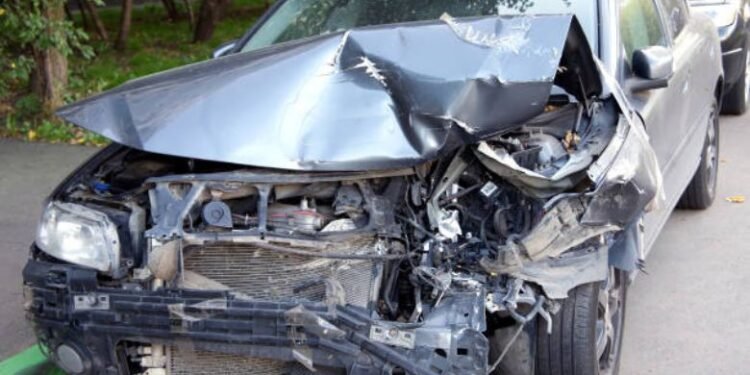
But its simplest, This is a car accident, An event where a moving vehicle conduct into something: another car, a tree, a pedestrian, Or just the ground. But that simple definition Barely a scratch the surface.
I scientific terms, It’s a car accident a rapid deceleration event, Importance a vehicle Traveling at speed suddenly stops or changes. Direction due to influence. That abrupt energy change Creates powers that affect everything in it: the vehicle structure, passenger, and anything I the vicinity.
Think of it like driving at complete speed. A wall of pillows. Sounds harmless, right? But if you remove the pillows And replace them with concrete… That’s what happens. A real crash. Same speed, the same energy, There is nowhere to go.
My First Real Lesson in What Happens in a Crash
I’ll never forget the day I really got it.
I was inside. An older sedan, goes down a highway with a friend. From a position, a car swerved in front to avoid a deer And kill the brakes. My seat belt snapped loudly. My coffee He entered a flight, And for a terrifying moment, We were both frozen in disbelief.
No one Horribly hurt, thank God, though my friend And I sat there afterwards. My hands still But the wheel, says“ That our a car crash, right? I a way.”
Turns out it was a car crash, only a low- speed one. But I that moment, I felt a car crash can feel the sudden loss of control, loud voice, and that split- second When duration seems measured.
Types of Car Crashes, More Than Just Bumps and Bruises
Not all car crashes are made equal. There are several common types, with each one having unique characteristics:
1. Collision from Behind
This is when one vehicle hits the back of another. It’s common in heavy traffic and often happens because no one noticed the car ahead slowing.
I’ve been rear-ended twice, the first time while waiting at a red light, the second time in bumper-to-bumper traffic. Each one felt different, but both were shocks that left me shaking, and asking, “What is a car crash?” in a much more serious way.
2. Head-On Collision
Two vehicles traveling in opposite directions crash front-to-front. These are among the most dangerous types because the forces involved are basically added together. Speed matters, much.
3. Clash of Side Effects
Also called T-bone crashes, these occur at intersections when one car plows into the side of another. They can be particularly serious because the sides of the car often have less structural protection.
4. Single car accidents
No other car Involved, but maybe a guardrail, tree or ditch. This is often due to loss of control, Distracted driving, or poor road conditions.
5. Rollover crashes
I more usual tall vehicles like SUVs and trucks. When the center of gravity The more, the easier it is. The vehicle Tipping along the strategy sharp turns or sudden maneuvers.
Every one Of these categories reminds us what a car crash looks Depends on the speed, environment, driver behavior, And luck.
The Human Factor: why Most Crashes It happens.
Research shows that approx 90– 95% Of all car crashes is due human error, No mechanical failure Or lonely weather?
It means what we do, or fail to do, behind the wheel More crucial than almost anything else.
Distraction
SMS, Telephone calls, adjustment the radio, You name it.
A few seconds of inattention But 60 km/ h It can mean the difference Between stopping in time and hitting something.
High Speed
Faster speeds An increase in both the likelihood of a crash and the severity of injury If one It happens.
The truth? Your stopping distance increases exponentially with speed, not linearly.
Impairment
Alcohol, drugs, even fatigue, destroy judgment, response time, and coordination.
These factors make accidents more likely and more serious.
Environment
Rain, fog, snow, these conditions Don’t be the reason an accident But their own, But they communicate human decisions.
A wet road + a busy driver = much bad combination.
The Science Behind Appreciating My Seat Belt
One thing I never appreciated until I learned the science was how car safety features, seatbelts, airbags, crumple zones, are designed to manage crash energy.
When a crash happens, that kinetic energy does not disappear. It’s transferred. The goal of safety systems is to control that energy flow, ideally away from people and into parts of the vehicle designed to absorb impact safely.
Seatbelts distribute the force throughout your torso. Airbags cushion the head and chest. Crumple zones are intentionally deformed to absorb energy like a protective sponge.
It’s fascinating, and honestly, pretty scary if you think about it too deeply.
Results: More Than Cars and Bumps
There is a reason “What is a car crash?” deserves more than a one-line explanation.
Car crashes are not just collisions of metal. They are events that can affect:
- Life and health, from whiplash to life-changing injuries
- Finances, repair costs, medical bills, insurance
- Mental well-being, anxiety, flashbacks, avoidance of driving
- Communities, loss, trauma, economic consequences
When I think back to that day on the highway, I realize how lucky we were. Not everyone walks away that way.
Prevention: What Research Says Works
So what can we do with all this knowledge?
Experts emphasize a combination of engineering, enforcement, and education, often called the “three E’s.”
Engineering
Better road design, improved lighting, clearer signage, and vehicle technology like automatic braking.
Enforcement
Speed limits, seatbelt laws, DUI checkpoints, laws matter when they’re followed.
Education
Public awareness campaigns, driver training, and community programs can make a difference.
But honestly? A lot of it starts with you.
My attitude toward driving changed when I truly understood what a car crash is, not just a concept, but energy, risk, consequence, and prevention.
Key Takings
If you came here wondering, “What is a car crash?” now you’ve seen it from multiple angles:
- Scientific
- Human
- Practical
- Personal
- A car crash is more than a word in a dictionary. This is a real- world event with physics behind This, folks the center of it, And preventable elements We can do it all influence.
- Next interval you’re behind. The wheel, Gradual down, change, merge or even wait a red light, Contemplate about it the energy around you. Respect it. Understand that. And drive sensibly.
- Because when you really understand. A car crash Yes, you obtain it. Every decision you establish the road matters.
Additional Resource:
- Crash Causes – World Road Association: Breaks down the human, vehicle, and environmental factors that contribute to car crashes using the Safe System approach.
- Fatality Analysis Reporting System (FARS): Official U.S. government database with detailed statistics on fatal crashes, useful for evidence-based analysis.