
Understand probable cause vs reasonable suspicion, how they differ, and how they impact police actions in everyday law enforcement situations.
When I first started learning criminal law, I thought honestly. Police officers need the same level of proof to every action they took.
I was mistaken, and that misunderstanding is where most people commence their journey with probable cause vs reasonable suspicion.
These two legal standards in Criminal Law shape how law enforcement communicates with citizens, and understanding them changes the way you observe everyday policing.
To Understand the Basics
To begin with, probable cause vs reasonable suspicion is not just a comparison of two legal definitions. This is a framework. It explains when and how government authority can intervene in a person’s freedom.
Reasonable suspicion is the lower threshold, allows officers stop and examine cards.
Probable cause is strong and permits arrest or search actions.
A Real-Life Perspective
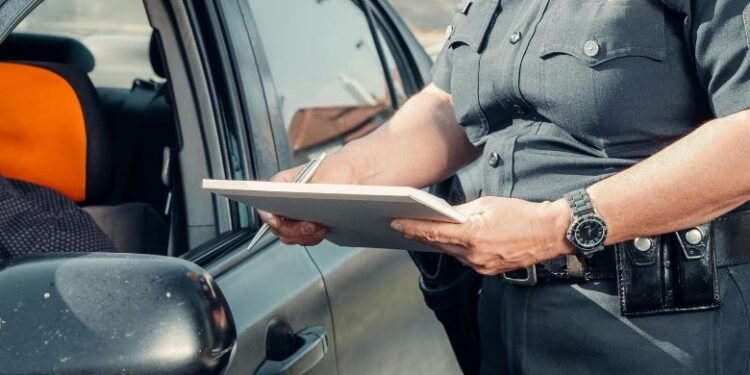
I remember seeing it once, a traffic stop unfold in my neighborhood. The officer noted unusual behavior and decided to question the driver. It was based on the moment—reasonable suspicion.
Later, when the evidence came out inside the vehicle, it increased to probable cause. That real-life shift is the essence of probable cause vs reasonable suspicion in action.
Legal Definitions Explained
Reasonable suspicion is based on specific and identifiable facts. It can’t be a guess or a hunch. Officers should be able to explain why something looks the way it does.
Probable cause is necessary facts and circumstances that will guide a reasonable person to believe a crime has been committed.
This distinction is important in court decisions.
The Escalation Process
The escalation process is another important concept often missed in basic explanations of probable cause vs reasonable suspicion.
Law enforcement usually begins with minimal information. They observe behavior, gather context, and proceed with stronger evidence. A simple observation can escalate into a legally valid arrest scenario if supported by additional facts.
Totality of Circumstances
Courts assess both standards using what is known as the totality of circumstances test. That doesn’t mean looking at one fact alone. Instead, they consider everything together.
Even innocent behavior can contribute to doubt along with other factors. This flexible approach makes probable cause vs reasonable suspicion a dynamic legal tool instead of a rigid checklist.
A Simple Analogy
To make it simpler:
Reasonable suspicion is like a puzzle that is only partially complete. You can perceive a pattern forming, but not the full picture.
Probable cause is when enough pieces supply it and the image becomes obvious enough to justify action.
This analogy helps explain probable cause vs reasonable suspicion in everyday terms.
Examples in Practice
In real policing:
Reasonable suspicion may include:
- Nervous behavior
- Unusual movement patterns
- Presence in a high crime area under suspicious circumstances
Probable cause may include:
- Visible contraband
- Reliable witness statements
- Direct evidence linking a person to a crime
The gap between them is about conviction, not just quantity.
Constitutional Balance
Another important insight about probable cause vs reasonable suspicion is how constitutional rights are balanced.
The Fourth Amendment protects citizens from unreasonable searches and seizures.
- Reasonable suspicion allows limited intrusion
- Probable cause protects against unjustified arrest or full searches
Together, they create a two-tier protection system.
How Officers Use These Standards
In practice, officers constantly move between these standards. A situation can start with reasonable suspicion and develop into probable cause through observation.
This progression is not only legal, but necessary for effective policing. Without it, officers would either act too quickly or not act at all.
Effect on Court Cases
During my studies, I realized that probable cause vs reasonable suspicion is not just academic language. It directly affects how evidence is collected and whether cases proceed to court.
If police exceed the limits of their authority without meeting the correct standard, evidence can be rejected, and cases can be dismissed.
Behavior and Context Matter
Courts rely heavily on context and behavior.
An action that seems innocent alone can become suspicious depending on the situation. For example:
- Running in a normal setting is harmless
- Running away from a known crime scene at night can contribute to reasonable suspicion
When combined with other facts, it can also support probable cause.
Not a Fixed Formula
Many people believe that probable cause vs reasonable suspicion is a strict formula. In reality, it is highly contextual.
Judges and officers rely on:
- Experience
- Environment
- Timing
- Behavior patterns
This makes the system flexible, but also complex.
A Graduated System of Authority
To summarize, probable cause vs reasonable suspicion represents a graded system of legal authority.
- One allows investigation
- The other allows enforcement
Both are necessary to balance public safety and individual rights. Without this structure, the legal system would either be too aggressive or too weak.
Why It Matters to Everyday People
Understanding probable cause vs reasonable suspicion is not just useful for law students. It helps everyday citizens understand their rights during police encounters.
Awareness of these standards builds confidence and reduces confusion in real-life situations.
Managing Uncertainty in Law Enforcement
Ultimately, probable cause vs reasonable suspicion is about managing uncertainty in law enforcement. It ensures that action is based on evidence that develops over time.
This balance keeps modern policing both effective and constitutionally fair.
Deeper Legal Perspective
Adding a deeper legal perspective helps clarify how courts apply these standards in real life.
One landmark case often discussed is Terry v. Ohio, where the concept of reasonable suspicion was formally recognized by the Supreme Court of the United States. This case allowed police officers to stop and briefly search individuals based on observable behavior instead of full probable cause. It permanently changed modern policing.
Role of Judicial Oversight
Another important point in understanding probable cause vs reasonable suspicion is the role of judicial oversight.
Judges do not consider situations in isolation. They reconstruct events after the fact and decide whether the officer’s interpretation of facts was reasonable at that moment.
This hindsight evaluation often determines whether evidence is admissible in court.
Uncertainty is Part of the System
A common misconception about probable cause vs reasonable suspicion is that officers must always be certain before acting.
In reality, the law accepts uncertainty as part of policing. Officers are trained to make fast decisions under pressure, but those decisions must still fall within constitutional limits.
How It Happens in Real Time
In everyday practice, reasonable suspicion can arise within seconds.
An officer may notice:
- Inconsistent stories
- Unusual timing
- Evasive movements
These small indicators, when combined, can justify a temporary stop. However, probable cause requires stronger confirmation, such as physical evidence or reliable testimony.
Another Simple Analogy
Think of it like weather forecasting:
- Reasonable suspicion is like seeing dark clouds and predicting a storm
- Probable cause is feeling the first drops of rain
Both involve interpreting conditions, but one predicts while the other confirms.
Policy and Prevention of Abuse
From a policy perspective, probable cause vs reasonable suspicion helps prevent abuse of power.
Without these standards, law enforcement could either overreact or hesitate too much. The balance ensures citizens remain protected while allowing officers to respond effectively to threats.
The Role of Technology
Technology is also changing how these standards are applied.
Body cameras, surveillance systems, and data analytics now provide additional layers of evidence. These tools can strengthen both reasonable suspicion and probable cause depending on what the data reveals.
Key Takings
Understanding probable cause vs reasonable suspicion requires looking beyond simple definitions. It involves:
- Legal history
- Constitutional interpretation
- Behavioral science
- Real-world policing dynamics
Together, these elements form a system designed to manage uncertainty while protecting fundamental rights.
Additional Resource:
- What Is Reasonable Suspicion? – Nolo: A clear, attorney-reviewed explanation of reasonable suspicion, including when police can legally stop or frisk someone.
- The Difference Between Reasonable Suspicion and Probable Cause – LegalClarity: A detailed breakdown of both legal standards, highlighting their differences and how they apply in real-life policing.