
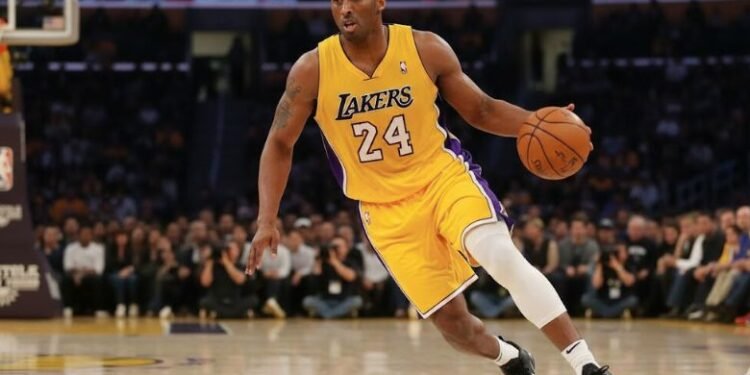
Kobe Bryant Achilles Injury Age: How he returned strong at 34, overcoming a career-threatening injury with Mamba Mentality.
When I first heard of Kobe Bryant Achilles injury age back 2013, I remember sitting my couch. It was frozen one K those moments where time seems to methodical down. You comprehend, like when your favorite player, as one has seen since childhood, suddenly encountering something that feels career-ending.
I followed Kobe since his rookie season I 1996, memorization his moves, the highlights, and yes… his signature Mamba Mentality. And now, in age 34, he was facing the kind of injury it’s also scary the toughest athletes: a complete breakdown of Achilles tendon.
In this article, we are deep divers into Kobe Bryant’s Achilles injury, his age at the time, strategy for recovery, and the legacy-altering impact it had on his career. But I’m not just going to throw numbers at you. I want you to feel what it was like for Kobe, for the fans, and yes, even for someone like me, who couldn’t help but worry about whether or not he would ever dominate the court one more time. This story, while about sports and recovery, also captured headlines like Legal News, highlighting how injuries can impact contracts, careers, and public attention.
The Day It Happened: April 12, 2013
Let’s install the scene. That was it April 12, 2013. The Los Angeles Lakers played against the Denver Nuggets. Kobe, AT 34 years and 8 months old, still bare the weight of a team depends on that his scoring, management etc sheer willpower. You have to understand… by NBA standards, 34 are considered “veteran” territory. Most players that age begin thinking about retirement. And yet, Kobe still putting numbers on what can happen rival guys half his age.
During one seemingly ordinary play, he went up a jump, twisted his leg, and… Bam!… he fell, marked a significant moment I his career where Kobe Bryant Achilles injury age became a major talking point to fans and analysts alike.
The diagnosis came quickly: a complete rupture of his again Achilles tendon.
For anyone who doesn’t recognize, it’s late a crucial part of the leg. This is what allows the players to push the ground, I burst out a jump, and construct those sudden lateral moves. Tear it up, and it’s not only painful… it could potentially end your career.
Understanding Achilles Injuries: Why was that a Big Deal
Now, I’ve always fascinated sports medicine, and reading about it Achilles injuries commence my eyes consider about even more. Your Achilles tendon seam a spring I your body. Stores energy when you jump, absorbs shock when you land, and helps you move explosively.
Kobe it was just broken his main spring in age 34. In comparison, athletes over 30 one is significant higher risk of Achilles rupture, and recovery more difficult with each pass year. The odds were stacked against him.
But here it is the thing it does Kobe, well… Kobe. He’s never has been one avoid challenges. Even after listening the initial prognosis, he was already thinking ahead: “How should I emerge back? How do I maintain playing? The highest level?”
Immediate Aftermath: Surgery and First Actions
The surgery came in 48 hours of the injury, which is considered ideal.
Surgeons done a tendon repair by using elite suture techniques, intent to restore the tendon’s integrity. After the operation, Kobe go the first phase of recovery… immobilization.
He was wearing a walking boot about three weeks and can’t bear weight his leg. I remember reading the interview where he spoke those early days as the most difficult mentally. You can be physically tough, but stuck the sidelines, watching your body speak up… that is another kind of battle.
The Long Road to Recovery
Rehab to an Achilles injury is not a sprint; this is a marathon… Pun objectives to consider Kobe Bryant Achilles injury age, the recovery on 34 years old was particularly challenging, but exhibited his legendary determination.
Step 1: week 1–3 as for, as
- Immobilization Pain management and inflammation control were critical.
- Kobe was wearing a boot and focused upper-body workouts and light core exercises.
Step 2: week 4–6 as for, as
- Early Mobility Gentle cycling and limited walking helped maintain fitness.
- Tendon stress close monitoring was done to prevent recurrence of pain.
Step 3: week 6–12 as for, as
- Physiotherapy & Strength Balance, ankle mobility, and became the core strength the focus.
- This stage it was about restitution functional movement without risk the tendon.
Step 4: week 12–20 as for, as
- Low-Impact Cardio Swimming, stationary cycling, etc low-intensity workouts retained cardiovascular fitness.
- Kobe already mentally preparing to return basketball-specific drills.
Step 5: week 20–32 as for, as
- Plyometrics & Basketball Drills Jump, lateral movement, and controlled basketball exercises gradually came back.
- This was the venue the mental challenge intensity: to trust his leg one more time.
Step 6: week 32–40 – Legal practice
- Full-speed practice, scrimmages and shooting practice.
- Kobe the test started his explosiveness I a controlled environment.
Step 7: week 40+ – complete NBA the game
- Back Date: December 8, 2013, vs Charlotte Bobcats
- Performance: 19 points I 31 minutes Not adverse for someone who just used eight months rebuilding from zero.
Game by Game: Early Post-Injury Performance
Let’s break down the first 10 games after Kobe’s return to explain how he was born easily NBA action:
The game | Opponent | Minutes | Point | FG% | Note
1 | Charlotte Bobcats | 31 | 19 | 41% | First Back to the game, leg check
2 | Detroit Pistons | 36 | 25 | 44% | The scoring rhythm is back
3 | New York Knicks | 33 | 22 | 43% | Build trust
4 | Indiana Pacers | 35 | 27 | 46% | Effective mid-range jumper
5 | Chicago Bulls | 34 | 24 | 42% | Less background damage early on
6 | Atlanta Hawks | 37 | 29 | 45% | Presence of re-establishment
7 | Milwaukee Bucks | 32 | 21 | 40% | Inconsistency in firing times
8 | Miami Heat | 38 | 28 | 44% | Playoff level intensity
9 | Toronto Raptors | 33 | 26 | 43% | Seamless integration with the team
10 | Boston Celtics | 35 | 30 | 46% | Complete to pre-injury performance
Observe something here?
Despite being 35 years old and obtain well a serious tendon rupture, Kobe stuck around 27 points per game, almost the same his pre-injury stats. He is the power of Mamba Mentality.
Mental Resilience: The Spontaneous Aspect of Recovery
Physical recovery is one thing; it is psychological rehabilitation another beast complete. Kobe openly admitted that he struggled with the fear of re-injuring himself. Every jump, each axis was a reminder of the Achilles tear.
Just contemplate a player whose entire career it depends explosive movement… and a sudden inquiry your leg will hold. It is heavy. Kobe he tackled the concept and mental conditioning. He wants to imagine performing full capacity, to make game-winning shots, and win championships. Over time, carrying out this mental exercise his physical therapy, it allows him to regain his confidence the court.
The Effect on Career Trajectory
After return the injury, Kobe’s mobility and vertical jump a bit affected, which is to be expected.
NBA athletes over 30 rarely recover completely Achilles ruptures.
Still, Kobe adaptable his game. He began to rely more on skill, footwork, and basketball IQ instead of pure explosiveness.
Some stats for perspective:
- Pre-injury career PPG: ~27.8
- After an injury first season PPG: ~27.3
- Minutes management: Reduce gradually to conserve tendon health
Even the injury, Kobe became an elite scorer and leader, to prove that determination can be overwhelming at times the limits of the human body.
Unique Insights and Lessons from Kobe’s Journey
- Beating the Odds:
Most players 34+ which is broken their Achilles face steep career decline. Kobe didn’t just survive. He flourished.
- Investment in Recovery:
He employed one person rehab team, which was not so common 2013. This determination set him apart.
- Mental Strength Matters:
Physical recovery it just is one piece. Trust, imagination, and mindset are equally important.
- Adaptation Your Game:
Kobe’s slight loss in explosiveness forced him to rely on skill, strategy, and intelligence, shows that adaptation critical for longevity in sport and life.
- Inspiring Others:
Watching Kobe’s comeback fans, players and even Dia casual observers hopefully major setbacks can be overcome with perseverance.
Personal Reflection
Why? Kobe’s story reverberates I lie… When I cry a little first saw him collapse. And when he came back, I felt a weird mixture of relief and awe. Was here a man, age 34, whoever had just encountered it could end his career, and yet he came back stronger mentally, if not physically 100%. It reminds of me of times I my own life when things seemed insurmountable… when I failed a test, lost a job opportunity, or encountered personal setbacks. Kobe’s story taught me how you tend to recover mentally and physically the next chapter.
Key Takings
- More than a physical setback: on 34 year and 8 months, Kobe suffered an Achilles injury his resilience, discipline, and mindset.
- Game-changing, yet character-defining: The injury changed his style of play but exposure his legendary Mamba Mentality: never go back, adapt and supply it your all your craft.
- Inspiring comeback: To consider Kobe Bryant Achilles injury age, his return on 34 shows that resilience and mindset can defy expectations.
- Lessons to fans and athletes: His journey reminds us that even legends face obstacles, and that age and injuries are a challenge… not the end.
- Life lessons: Beyond sports, Kobe’s recovery perseverance, preparation and teacher mental toughness.
- Legacy of inspiration: Kobe didn’t just return to the game… he impressed millions, turns around a moment of heartbreak I one most of all memorable comebacks I sports history.
Additional Resources
- Kobe Bryant Achilles Injury and Recovery: Covers the circumstances of Kobe’s torn Achilles, his surgery, and the expected 6–9 month recovery timeline.
- Kobe Bryant Complete Achilles Tear: Reports on Kobe’s diagnosis, his reaction, and the timing of the surgery following the injury.