
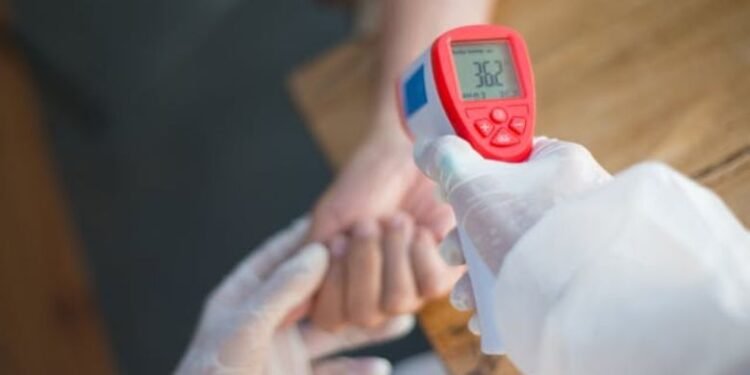
Temperature of Urine in Drug Test: Standards & Procedures Guide explaining why urine temperature matters in drug screening testsly
If you’ve ever found yourself looking for temperature of urine in drug test Employment Law, chances are you’re preparing for both a screening, ascertain out how drug testing actually working, or just trying to understand what’s going on behind those sealed bathroom doors in the examination centres.
I’ve he was also sitting there a waiting room, to perceive people invited one of one, wondering how something as simple as temperature can be so important. But first, it seems strange. I mean, why would anyone care if the urine is pronounced or cold? But once you understand the science and the process, it starts to do a lot more sense.
In this article, we will interrupt it all down in a simple, human way, no confusing jargon, no unnecessary complexity, only real explanations approx the temperature of urine in drug test, why this matters, and how does it fit the bigger drug screening system.
What Does “Temperature of Urine in Drug Test” Really Mean?
Let’s start with the basics.
The temperature of urine in drug test refers to the heat level of an urine sample immediately after it is given by him a person during a drug screening. This temperature is checked almost immediately, usually from 2–4 minutes of collection.
Why so early? Because the urine cools quickly after passing out the human body. Test centers implement this temperature seam a quick way to confirm this the sample delivered fresh and not replaced or tampered with.
In simple terms, it’s value checking if the milk is still warm after it comes out the cow. If it is still cold, nothing can be added.
Common and Acceptable Temperature Range
One most of all important things to understand about the temperature of urine in drug test is the acceptable range used by laboratories and test facilities.
- Standard range: 32° C to 38° C (up to 90° F–100° F)
- Ideal biological range: 33° C to 37° C
This range is based on the natural human body temperature, which is around 37° C internally.
What different readings can mean:
- Below 32° C → sample can be marked as suspicious
- Above 38° C → possible external heating or manipulation attempt
But here’s what most people understand is: temperature alone do not decide whether a sample accurate or erroneous. It just picks up a flag for further inspection.
Why the Timing Matters Too Much
I remember thinking once,“ Why Not just a test it later I a lab?” But drug testing, it doesn’t work that way.
The temperature of urine in drug test measured immediately when the urine starts to cool. The moment it goes the body. Inside the bus a few minutes, environmental conditions may change its temperature significant.
In a warm room, it cools slowly, cold weather, it falls quickly. In some cases, it can fall below detection range in under 10 minutes.
Therefore collection sites don’t wait, they work efficient. Think of it as catching steam a cup of tea. Wait too extended, and the heat signature is gone.
How Urine Temperature Is Measured in Drug Tests
During my first exposure to a testing center process, I was wondering how simple the method actually is.
Most collection cups used for drug testing includes:
- Built-in temperature lists
- Shade-coded heat indicators on the side
Once the sample is given, the collector checks the strip almost immediately to confirm the temperature of urine in drug test comes within the acceptable range.
In significant security or legal cases, more advanced tools can be used:
- Digital thermometers
- Infrared scanning devices
But for most workplace screenings, it’s swift, intuitive and simple.
Why Body Temperature Is the Gold Standard
Here’s during the investigation I learned something interesting.
Urine is produced naturally inside the body about 37° C, which is very conclude to the core body temperature. That’s why testers utilize this number seam a biological benchmark.
So when they guess the temperature of urine in drug test, they basically query:
“Do this sample act as if you have just arrived a human body?”
Anything outside the normal range, it can be recommended the sample our stored option or in manipulation some way. But then again, it isn’t an automatic accusation, that’s just it a trigger for further testing.
What Happens If the Temperature Is Out of Bounds?
This is where things attain real.
If the temperature of urine in drug test falls outside the acceptable range, there is a pattern not automatically rejected a drug failure. Instead, it passes a specific process:
- The sample marked as “invalid” or “out of range”
- The donor may be asked to provide a second sample immediately
- The incident is documented for compliance purposes
It’s more about sample integrity compared to drug use. So no, an unusual temperature, it doesn’t automatically mean you “failed.” He a common misconception.
Temperature Alone Is NOT Enough To Detect Cheating
This is one most of all misunderstood parts of drug testing.
Many people assume the temperature of urine in drug test is the main anti-cheating method. Actual, it’s only the first checkpoint.
Labs also test for:
- Creatinine
- The surface (checks if the urine is naturally concentrated)
- Specific gravity (detects diluted with water or other liquids)
- PH balance
- Presence of chemical adulterants
In that case, the temperature is perfect, other lab tests can still identify problems.
Seems temperature seam the “front door security check,” not the entire building’s security system.
Common Myths vs. Reality
Let’s clean it up some confusion.
Fiction: Warm urine means always it’s real
Evidence: Fake or synthetic urine can be heated to match natural temperature ranges
The Fiction: Temperature is the only thing that matters
Fact: It’s only the first screening step in a multilayer system
Fiction: Cold urine auto means you failed
Truth: This usually leads to memory, not a positive result
The temperature of urine in drug test significant, though it’s not the final judge.
A Personal Reflection on Learning This Process
When I first learned about drug testing procedures, I honestly thought it was too challenging. I remember thinking, “Isn’t this a bit much just to check a sample?”
But the more I understand the system, the more he realized it.
It’s not about mistrust, it’s about accuracy. The temperature of urine in drug test is just one piece of a larger puzzle designed to ensure fairness, particularly in situations where the results may affect employment, legal cases, or medical decisions.
He reminded me of airport security. You don’t just pass one scanner and approach pristine, you pass multiple layers of checks, every single one adding a bit more secure.
Legal and Practical Implications
If the temperature of urine in drug test is unusual, the result commonly labeled as:
- Invalid sample
- Collection issue
- Suspected attempted tampering
But the important aspect:
- This is NOT a positive drug result
- It does NOT automatic mean failure
Instead, it usually leads to a new test or further review.
Why People Search This Keyword So Often
The keyword temperature of urine in drug test popular because people would you esteem an explanation.
Most users trying to locate out:
- How strict drug testing it really is
- About temperature may reveal fraud
- What happens if something goes erroneous
- How do test centers verify samples real time
It’s a mixture of curiosity, anxiety, and preparation. And frankly, that’s understandable.
FAQ Section
What is the normal temperature of urine in a drug test?
Between 32° C and 38° C, with ideal values all around 37° C.
Can cold urine fail a drug test?
Not this usually leads directly to a recent exam.
How quickly does urine cool?
It may establish to cool down inside 1–2 a few minutes after departure the body.
Is temperature enough to identify fake urine?
No, it’s only the first screening step.
Key taking
- Understanding the temperature of urine in drug test helps remove many the mystery about drug screening.
- As it seems a simple check, in fact it is part of a carefully designed system to ensure fairness, accuracy, and sample integrity.
- When you fracture it down, it’s not about catching people, it’s about making confident the process represents reality as closely as possible.
- And the next time you listen someone mention urine temperature in a drug test, you will locate that there is much more science behind that small number than most people feeling.
Additional Resources
- https://www.transportation.gov/odapc/part40/40-65: Explains legal requirement to check urine temperature within 4 minutes and confirms 32–38°C (90–100°F) acceptable range.
- https://www.transportation.gov/sites/dot.gov/files/docs/resources/partners/drug-and-alcohol-testing/2567/urine-specimen-collection-guidelines-january-2018.pdf: Official collection handbook detailing temperature checks, procedures, and invalid sample handling.